


The Transformative and Evolving Data Center Cooling Market Trends to Watch
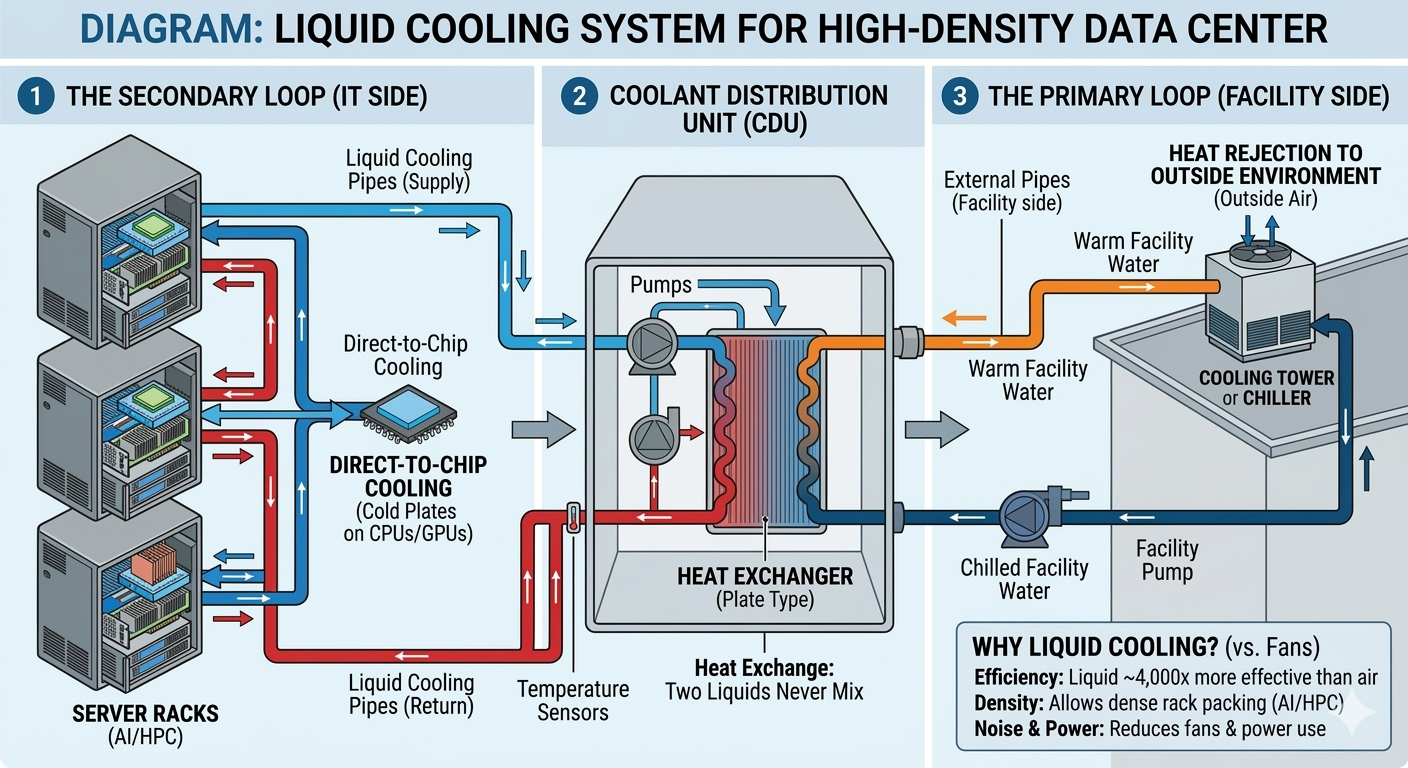
The data center industry is at a critical inflection point, where the traditional methods of thermal management are no longer sufficient for the demands of modern computing, giving rise to a landscape of transformative Data Center Cooling Market Trends. At the forefront of this evolution is the undeniable and accelerating shift from air to liquid cooling. For decades, chilled air has been the workhorse of the industry, but the relentless increase in server rack power density, driven primarily by the adoption of heat-intensive GPUs for AI and HPC, is pushing air cooling to its physical and economic limits. Air is a relatively poor conductor of heat, and moving enough of it to cool a 100 kW rack is becoming impractical. This has opened the floodgates for liquid cooling technologies, which use water or specialized dielectric fluids that can absorb and transport heat far more efficiently. This trend is not merely an incremental improvement; it represents a fundamental paradigm shift in data center design and operation, requiring new infrastructure, new skill sets, and a new way of thinking about thermal management. The transition to liquid is no longer a question of "if" but "when and how."
Within the broader trend of liquid cooling, two primary methodologies are gaining significant traction: Direct-to-Chip (D2C) and Immersion Cooling. Direct-to-Chip cooling is a more targeted and less disruptive approach, making it a popular choice for retrofitting existing facilities. In this method, liquid-filled cold plates are mounted directly onto the hottest components on a server's motherboard, typically the CPU and GPUs. The liquid circulates through these plates, absorbing heat directly at the source, and is then piped out of the server and rack to be cooled. This allows for the capture of 70-80% of the server's heat directly in the liquid loop, dramatically reducing the heat load on the room's air conditioning system. On the other end of the spectrum is Immersion Cooling, a more radical but highly effective approach. This involves completely submerging entire servers or server components in a bath of non-conductive, dielectric fluid. The fluid is in direct contact with every heat-generating component, providing maximum thermal transfer. Immersion cooling offers the highest potential for efficiency and density but requires a complete rethinking of server hardware and data center design, making it more common in new, purpose-built facilities.
Another powerful trend reshaping the market is the deep integration of software, analytics, and Artificial Intelligence (AI) into the cooling infrastructure itself. Modern data centers are complex ecosystems that require sophisticated management to operate at peak efficiency. Data Center Infrastructure Management (DCIM) software has evolved from simple monitoring and alerting tools into powerful analytics platforms. These systems collect real-time data from a vast network of sensors measuring temperature, humidity, airflow, and power consumption throughout the facility. The current trend is to apply AI and machine learning algorithms to this data to create "intelligent cooling" systems. These AI-driven platforms can perform predictive maintenance, identifying potential cooling unit failures before they occur. More impressively, they can dynamically adjust cooling output in real time based on the actual IT workload, ramping up cooling for specific racks during periods of high computational demand and scaling it back to save energy during lulls. This creates a self-optimizing, closed-loop system that maximizes both reliability and energy efficiency, a trend that is becoming essential for managing large and complex facilities.
Sustainability and circular economy principles are no longer niche concerns but are now central trends driving innovation in the market. The sheer energy and water consumption of data centers has placed them under intense scrutiny from regulators, investors, and the public. In response, a key trend is the design of cooling systems that minimize environmental impact. This includes a massive push towards "free cooling" techniques that use ambient outside air or water to cool the data center for a significant portion of the year, reducing the reliance on energy-intensive mechanical refrigeration. Another major focus is on water conservation, leading to the development of advanced adiabatic cooling systems that use a fine mist to pre-cool the air with minimal water consumption, and a preference for closed-loop liquid cooling systems that recycle the same fluid indefinitely. A forward-looking trend is waste heat reuse. Instead of simply venting the massive amount of captured heat into the atmosphere, innovative projects are now using this waste heat for practical purposes, such as heating nearby office buildings, residential districts, or greenhouses, turning a data center's thermal byproduct into a valuable community asset.
Top Trending Reports:

 French