


When the air conditioner is not the problem
When the air conditioner is not the problem
A new system does not fix a hot back bedroom if the duct feeding it came apart in the attic. It does not fix a house that gains heat faster than the equipment can remove it, and it does not fix a thermostat reading a wall that is warmer than the room. Equipment gets replaced for house problems often enough that it is worth knowing what the alternatives look like.
The duct that came apart
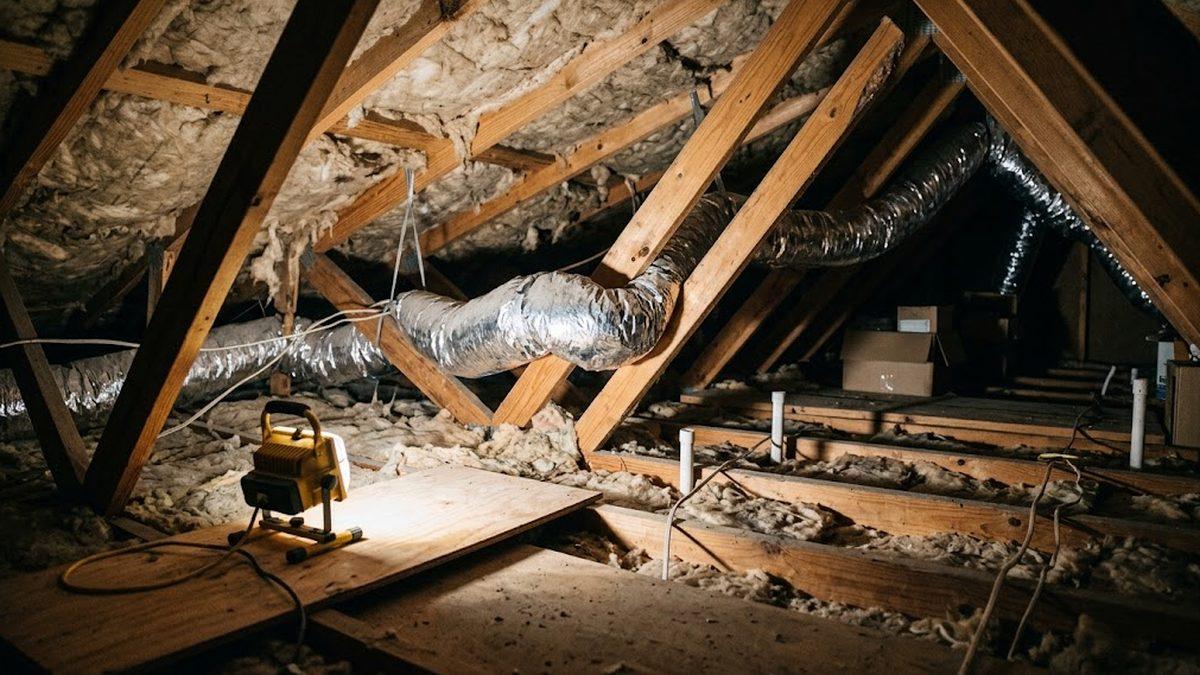
Flexible duct in a Florida attic is held to its fittings with straps and mastic, and over years of thermal cycling those connections fail. A duct that has separated at the boot dumps every cubic foot of conditioned air it carries into a space that reaches well above 120 °F on a summer afternoon.
The room it served gets nothing. The rest of the house gets a little less than it should. The system runs constantly and the bill climbs, and from inside the house it looks exactly like an air conditioner that has lost capacity.
It is also cheap to find and cheap to fix. Someone with attic access and a light can see a disconnected duct in a few minutes. A duct leakage test puts a number on the whole system, and if the answer is a quarter of the airflow going into the attic, no equipment decision makes sense until that is dealt with.
The return air problem
This one is nearly invisible and extremely common. Most houses here have supply registers in every room but only one or two central returns. Air pushed into a bedroom has to get back to the return, and with the bedroom door closed the only path is the gap under the door.
When that gap is too small, the room pressurises. A pressurised room cannot accept more air, so airflow falls, and the room stops cooling in the evening when the door is closed. The rest of the house goes slightly negative, which pulls unconditioned air in through every leak in the building, and in this climate that air is humid.
The result is a bedroom that is warm at night and cool with the door open, and a house whose humidity rises after everyone goes to bed. The fixes are undoor clearance, transfer grilles, jumper ducts or a dedicated return, and none of them involve the equipment.
The thermostat is reading something other than the room
Thermostats control what they measure, and where they are mounted determines what that is. On an exterior wall, on a wall with an uninsulated cavity behind it, in direct sun from a nearby window, above a lamp or a television, or immediately in the path of a supply register: each of these makes the sensor read something other than the temperature people experience.
Symptoms follow the error. A thermostat reading warm makes the system run past the point where the house is comfortable. Reading cold, it shuts off early and leaves the house warm. Sitting in the discharge of a register, it satisfies almost immediately and short cycles, which wrecks dehumidification.
Test it with a separate thermometer at seated height in the middle of the room, compared against the thermostat's own display. A consistent difference of several degrees is worth acting on, and relocating a thermostat is a modest job against the cost of chasing the symptom through the equipment.
| Complaint | Often blamed on | Worth checking first |
|---|---|---|
| One room never cools | System capacity | Duct to that room; return air path; register damper |
| Warm upstairs, cool downstairs | Undersized system | Duct design, attic insulation, stack effect |
| Bills rising each year | Ageing equipment | Duct leakage, insulation, added loads |
| Humidity high, temperature fine | Refrigerant | Oversizing, infiltration, exhaust fans, fan set to ON |
| Cools poorly only in the afternoon | Failing compressor | Solar gain through west glazing; attic temperature |
| Room warm at night, fine by day | Thermostat schedule | Closed door with no return path |
The house is gaining heat faster than it was
Nothing about the equipment changed and the load did. This is the category people find hardest to accept, because the air conditioner is the thing that visibly stopped keeping up.
Insulation settles and gets displaced by anyone working in an attic, and coverage installed decades ago is often below what is recommended now. Recessed light fixtures penetrate the ceiling plane and leak conditioned air upward. Attic ventilation that has been blocked by insulation lets attic temperatures climb further than they should, and everything below a hot attic gains more heat.
Then there are the deliberate changes. A screened lanai converted to glazed living space. A room built above the garage. A west-facing window enlarged for the view. Each adds load the original equipment was never sized for, and each was signed off by someone who did not recalculate the cooling requirement.
Occupancy counts too. People, cooking, laundry and long showers all add heat and moisture, and a house with three more residents than it had five years ago is a different thermal problem.
Negative pressure and where humidity comes in
Every exhaust fan in the house moves air outdoors, and that air must be replaced. In a reasonably sealed house it is replaced through leaks in the envelope, which in Southwest Florida means hot, humid outdoor air arriving somewhere you did not choose.
Large kitchen hoods are the usual culprit, but bathroom fans left running for hours and a clothes dryer venting outside all contribute. So does a duct system with more leakage on the return side than the supply side, which pulls attic air directly into the system.
The signature is humidity that rises while the house is being actively ventilated, and it is worth investigating before concluding that the equipment cannot dehumidify. A system removing moisture at its rated capacity will still lose to a house drawing humid air in faster.
How to tell which it is
Two measurements separate an equipment problem from a house problem, and neither is expensive.
The first is the supply-to-return temperature difference at the air handler. If the system is producing 16 to 22 °F of split there, it is making cooling correctly. If it makes that split at the equipment but a distant room does not benefit, the cooling is being made and lost, which is a distribution problem.
The second is total external static pressure. High readings mean the duct system cannot move the air the equipment is trying to push, and no replacement fixes that; a new blower simply fights the same restriction.
Ask for both before accepting any recommendation to replace working equipment. A contractor willing to measure and report them is giving you something you can act on, and what a proper diagnostic covers is set out at https://acromanservice.com/air-conditioning-repair-diagnostic.
The order to spend money in
When several things are wrong at once, and in an older house they usually are, sequence decides how much of the budget does useful work.
- Air sealing and the ceiling plane. The cheapest reduction in load available. Sealing attic penetrations, top plates and recessed fixtures costs little and reduces both the heat and the moisture entering the house.
- Duct repair. Reconnecting, sealing and insulating what already exists. Delivering the cooling you are already paying to produce is better value than producing more of it.
- Insulation. Bringing attic coverage up to a sensible level for the region, and checking that soffit ventilation has not been blocked by it.
- Shading and glazing. Solar control on west-facing glass, whether film, blinds used before the heat arrives, or exterior shading. This is where the afternoon problem lives.
- Equipment, last. Sized against the house as it now is, after the first four steps have reduced the load.
The reason the order matters is that equipment sized before the improvements is oversized after them, and oversized equipment in this climate dehumidifies badly. It is entirely possible to make a house more efficient and less comfortable by doing these in the wrong sequence.
Where the equipment has genuinely failed and cannot wait, the compromise is to have the load calculation account for improvements you are committed to making within a year or two, and to say so explicitly when the sizing is done.
Frequently asked questions
Will a bigger system fix a room that never cools?
Almost never, and it usually makes the house worse. If the air is not reaching the room, more capacity produces more air that does not reach it, while oversizing degrades dehumidification everywhere else.
Is a duct leakage test worth paying for?
Before any replacement decision, yes. It converts an assumption into a number, and in older Florida housing the number is frequently large enough to change what you should buy.
Do closed doors really matter that much?
In a house with a single central return, yes. Measurable pressure differences build up in closed bedrooms, and the result is both a warm room and increased infiltration into the rest of the house.
Should I add insulation before replacing the system?
Where insulation is genuinely deficient, doing it first is the better order, because it reduces the load and therefore the size of equipment the house needs. Replacing first locks in a system sized for the house as it was.
Current as of September 2026.

 French