


Real Estate Tokenization: Why Investor Reporting Could Become a Competitive Differentiator
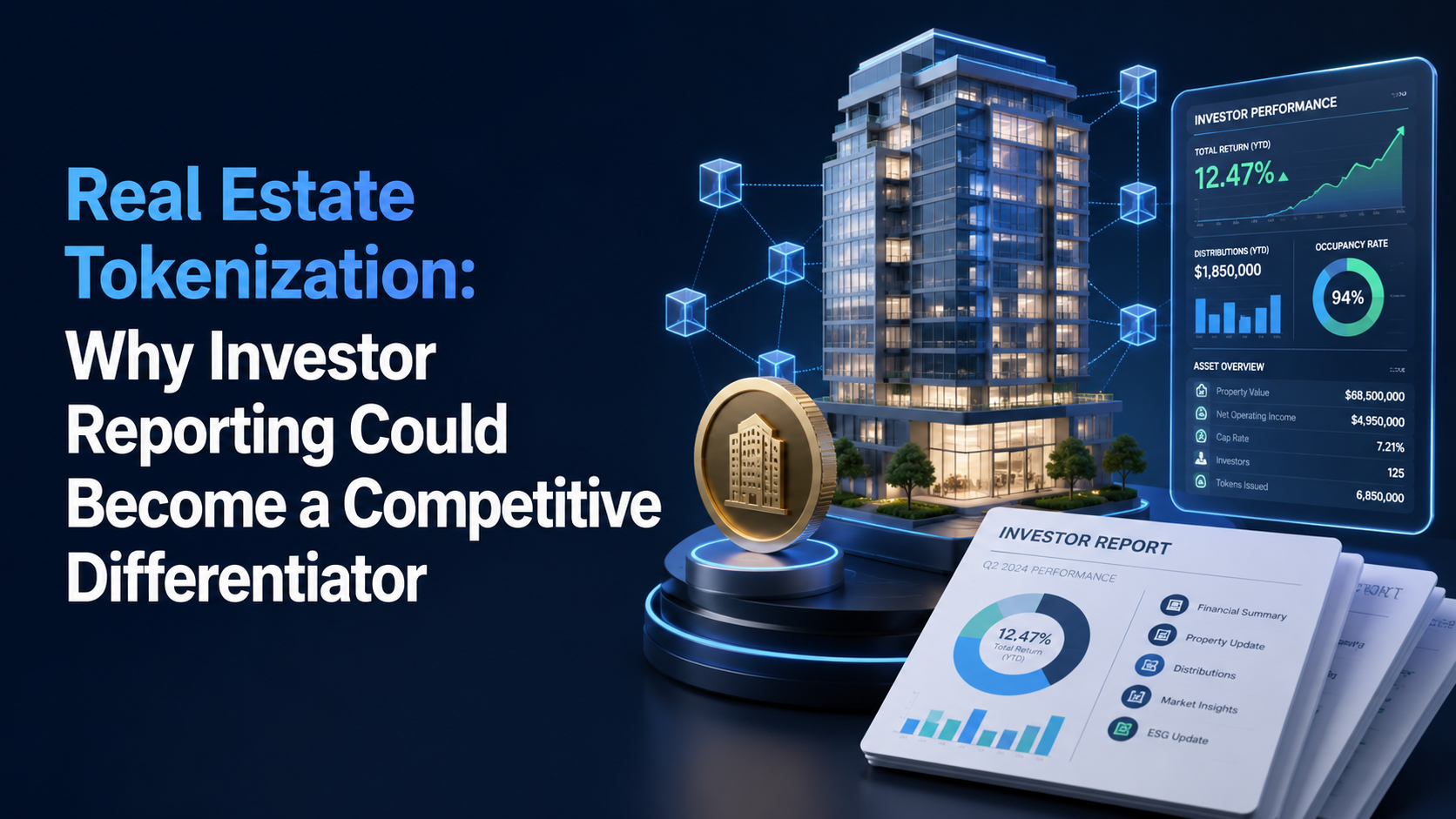
Real Estate Tokenization is changing how property ownership, investment access, and asset management can operate in digital markets. Converting property-related rights into blockchain-based tokens is only one part of the process. Once investors hold those tokens, they need regular information about the asset, financial performance, distributions, occupancy, expenses, valuations, and other events that may affect their investment.
This makes investor reporting an increasingly important part of a tokenized property business. A platform may offer fractional ownership and digital transactions, but investors still judge the experience through the information they receive after investing. If one platform provides timely, detailed, and understandable reports while another offers limited updates, the quality of reporting can influence where investors choose to participate.
For a real estate tokenization company, reporting therefore has the potential to become a competitive differentiator. It can affect investor confidence, participation, retention, and the perceived quality of the overall investment experience. As property markets become more digital, reporting may move from an administrative activity to a major part of platform operations.
Why Investor Reporting Matters in Real Estate Tokenization
Traditional property investment already involves financial statements, rent information, occupancy figures, valuation reports, tax documents, and distribution records. Tokenized property investment adds another information layer because investors may monitor token holdings, wallet activity, transactions, distributions, and digital ownership records.
A real estate asset tokenization company needs to consider how these different data points will reach investors. A report that only shows token balances may not provide enough context about the underlying property. Investors may also want to know how rental income is performing, whether expenses have changed, and how the property is progressing against its financial expectations.
Method: Connect Property Data With Investor Data
A useful reporting structure can combine property-level information with investor-level information. Property data can include rental income, occupancy, maintenance costs, debt obligations, valuation changes, and operating expenses. Investor data can include token holdings, purchase history, distributions received, and transaction activity.
Combining these records gives investors a more complete view of their position and the asset supporting it.
Reporting Can Influence Investor Confidence
Investor confidence is influenced by how consistently an investment platform communicates. When investors receive updates only when something significant happens, they may have limited visibility into what is happening between major events. Regular reporting creates a communication rhythm that keeps investors informed about the property and their holdings.
For Real estate tokenization platforms, this can become especially important because investors may come from different markets and may have limited experience with property ownership structures based on blockchain technology.
A well-organized report can explain financial results without requiring investors to interpret raw blockchain transactions or property-management records themselves. This makes reporting an important part of the investor experience rather than simply a document-generation task.
Method: Establish a Reporting Calendar
A platform can establish monthly, quarterly, and annual reporting cycles. Monthly updates may focus on occupancy, rental collections, expenses, and distributions. Quarterly reports can provide deeper financial information and asset performance. Annual reports can include valuation information, tax-related documents, historical performance, and major property developments.
A fixed reporting calendar gives investors a predictable source of information.
What Investors May Expect From Tokenized Property Reports
Investor expectations can vary according to the type of property, investment structure, and regulatory environment. However, several information categories can provide meaningful insight into an asset.
Financial performance may include rental revenue, operating expenses, net income, debt payments, and distributions. Property information may include occupancy, lease activity, maintenance work, and major changes involving the asset. Token information may include the investor's holdings, transaction history, distribution history, and relevant blockchain records.
Reports can also include notices about refinancing, property sales, insurance matters, changes in management, or significant capital expenditure.
Method: Divide Reports Into Information Sections
Instead of placing every data point into one long document, reporting can be divided into sections such as property performance, financial activity, token activity, distributions, valuation, and recent developments.
This approach can make reports easier to review while allowing investors to focus on the information most relevant to them.
Real Estate Tokenization Platform Development and Reporting Architecture
Investor reporting should be considered during real estate tokenization platform development rather than added after the platform has already been launched. The reporting system depends on information collected throughout the platform, including investor onboarding, token issuance, transactions, payments, property management, and blockchain activity.
A real estate tokenization development company can structure the platform so that reporting data is collected throughout the investment lifecycle. This reduces the need to gather information manually whenever a report is required.
The platform can use separate data sources for property management, accounting, investor records, and blockchain transactions. These sources can then feed a reporting layer that prepares investor-facing information.
Method: Design Reporting Around Data Sources
During real estate tokenization development, businesses can identify where every reporting data point originates. Rental figures may come from property-management systems, while distributions may come from payment records and token balances may come from blockchain records.
Mapping these sources early can reduce inconsistencies between investor dashboards and formal reports.
Personalized Reporting Can Improve the Investor Experience
Not every investor needs the same information. A small investor may want a simple summary showing token holdings, recent distributions, and property performance. An institutional participant may need more detailed financial statements, transaction records, valuation information, and historical data.
A real estate tokenization platform development company can therefore include different reporting views within the investor dashboard. Investors may be able to view portfolio-level information, individual property reports, distribution history, and transaction records.
Personalization does not need to mean creating a completely different reporting system for every investor. It can involve giving users filters and reporting options based on their holdings and permissions.
Method: Offer Multiple Reporting Views
A platform can provide a summary view for quick monitoring and a detailed view for deeper analysis. Downloadable statements can also be provided in commonly used formats for accounting and recordkeeping.
This gives investors more control over how they review their investment information.
Reporting Can Become a Differentiator Between Platforms
As more businesses enter tokenized property markets, basic token issuance may become less distinctive. Several platforms may offer fractional property ownership, digital wallets, investor dashboards, and secondary trading functions.
When the basic investment features become similar, supporting services can influence investor preferences. Reporting is one area where platforms can create a noticeable difference.
A real estate tokenization company that provides frequent, well-organized reporting may appear more investor-focused than a platform that only provides token balances and transaction histories. This difference can matter when investors compare platforms before committing capital.
Method: Compare Reporting Quality With Investment Features
Businesses can assess reporting alongside token issuance, trading, custody, onboarding, and payment functions. Metrics such as reporting frequency, data coverage, report availability, document history, and investor access can become part of the platform's service evaluation.
This allows reporting to receive the same planning attention as other platform functions.
How Real Estate Token Development Can Support Reporting
Real estate token development involves more than creating a digital representation of property-related rights. The token's activity can also generate information that becomes relevant to investor statements.
For example, token transfers can produce transaction records, while distribution mechanisms can provide information about payments. Smart contract events can also contribute to an auditable record of certain activities associated with token ownership.
However, blockchain records do not automatically provide the full financial picture of a property. Rental revenue, expenses, valuations, and property operations usually depend on information outside the blockchain.
Method: Combine On-Chain and Off-Chain Records
The reporting system can combine blockchain records with property and financial records. The blockchain can provide information about token activity, while accounting and property systems can provide operational and financial information.
This combination can produce reports that connect digital ownership activity with the performance of the underlying property.
Reporting and Regulatory Requirements
Real estate tokenization operates within legal and financial frameworks that can differ by jurisdiction and investment structure. Reporting requirements may therefore vary depending on how tokens are classified, who can invest, and how distributions are handled.
A platform may need to maintain records related to investor identity, transactions, ownership, payments, and financial statements. Certain markets may also require periodic disclosures or investor communications.
For a real estate tokenization development company, reporting requirements should be reviewed during platform planning. Waiting until after launch can result in costly changes to data structures and workflows.
Method: Map Reporting Requirements Before Launch
Businesses can list every report and investor communication required by their operating model and target jurisdictions. Each requirement can then be connected to the relevant data source and user permission.
This creates a reporting framework that fits the investment structure instead of forcing the business to adapt an existing system later.
Automated Reporting Can Reduce Administrative Work
Investor reporting can involve substantial repetitive work when handled manually. Property managers, finance teams, compliance personnel, and platform administrators may all need to contribute information.
Automation can reduce repeated data collection by allowing the platform to generate reports from existing records. Scheduled reports can be prepared for specific investor groups, while notifications can alert investors when new documents become available.
Automation does not remove the need for human review. Financial and property information may still require verification before publication.
Method: Add Review Before Distribution
A reporting workflow can include data collection, report generation, internal review, approval, and investor delivery. This creates a controlled process while reducing repetitive preparation work.
The same approach can be used for monthly statements, distribution notices, quarterly reports, and annual investor documents.
What Top Real Estate Tokenization Companies Can Learn From Reporting
Top real estate tokenization companies and Best real estate tokenization companies are likely to compete on more than token issuance. Investor communication, platform usability, asset information, transaction management, and post-investment services can all influence the market's perception of a platform.
Reporting provides a practical way to demonstrate how a platform supports investors after they have purchased tokens. A company that continues communicating after the transaction shows that its relationship with investors does not end when tokens are issued.
This can become particularly important for long-duration assets such as commercial buildings, residential portfolios, hotels, healthcare properties, and industrial real estate.
Method: Treat Reporting as an Ongoing Service
Businesses can include investor reporting within their regular service model. Reports can be accompanied by property updates, distribution notices, financial documents, and relevant asset events.
This positions reporting as part of the investment experience rather than an occasional compliance obligation.
Reporting Could Become a Measure of Platform Quality
The future of tokenized property markets may involve greater competition between platforms offering similar investment structures. In such an environment, investors may evaluate platforms based on what happens after investment.
Investor reporting can become one of those evaluation points. The quality of information, frequency of updates, access to historical records, and connection between property performance and token ownership can influence the overall investor experience.
For businesses considering real estate tokenization platform development, reporting deserves attention from the earliest planning stages. It affects data architecture, dashboard design, investor communication, compliance workflows, and post-investment operations.
Conclusion
Real Estate Tokenization is creating new ways to represent and manage property investment, but the investor relationship continues long after tokens are issued. Reporting can give investors ongoing insight into property performance, financial activity, distributions, token holdings, and important asset events. As more platforms enter the market, investor reporting could become a practical differentiator that influences trust, engagement, and long-term participation. Businesses planning real estate tokenization development should therefore consider reporting as part of the complete investment lifecycle, covering data collection, report preparation, investor dashboards, document access, and communication workflows. Blockchain App Factory provides Real estate tokenization development services that can support businesses planning digital property investment platforms, token issuance systems, investor interfaces, and related platform functions.
FAQs
1. What is investor reporting in Real Estate Tokenization?
Investor reporting refers to the regular information provided to token holders about their investment. It can include property performance, financial results, distributions, token holdings, transaction records, valuations, and major asset-related events.
2. Why is investor reporting important for tokenized real estate?
Investor reporting gives token holders regular information about the property and their investment position. Consistent reporting can help investors understand asset performance and monitor their holdings over time.
3. What information can a tokenized real estate investor report include?
A report can include rental income, occupancy, operating expenses, net income, distributions, valuation information, token balances, transaction history, and significant property updates.
4. How does blockchain support investor reporting?
Blockchain can provide records of token issuance, transfers, ownership changes, and certain distribution activities. These records can be combined with property-management and accounting data to create broader investor reports.
5. Can investor reporting be automated?
Yes. A tokenization platform can collect information from connected systems and generate scheduled reports. A review and approval process can be added before reports are delivered to investors.
6. Should reporting be included during real estate tokenization platform development?
Yes. Planning reporting during platform development allows businesses to structure data collection, permissions, dashboards, document storage, and reporting workflows from the beginning.
7. Can reporting become a competitive differentiator?
Yes. When several platforms offer similar tokenization and investment functions, the quality and frequency of investor information can influence how investors compare those platforms.
8. What role does a real estate tokenization development company play?
A real estate tokenization development company can assist with platform architecture, token systems, investor dashboards, reporting workflows, blockchain integration, payment functions, and other components required by a tokenized property platform.

 English