


Understanding the Pivotal Role of Capacitive Sensing in the Modern Touch Screen Controllers Market
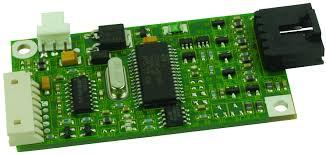
Capacitive sensing has become the gold standard in the touch interface world, largely displacing older resistive technologies in the consumer market due to its superior clarity and multi-touch capabilities. A touch screen controller for capacitive screens works by measuring the change in capacitance when a finger—which carries an electrical charge—approaches the screen. The complexity of these controllers has scaled with the size of the displays; while a smartphone might only require a relatively simple IC, a large-format interactive whiteboard or a 27-inch automotive cockpit display requires a controller with a high signal-to-noise ratio to filter out interference from the display panel itself. Innovations in "in-cell" and "on-cell" touch technologies have further integrated the sensing layer directly into the display stack, requiring controllers that are highly sensitive and capable of operating in close proximity to the high-voltage noise generated by the display pixels.
Beyond the consumer realm, the industrial and medical sectors are placing unique demands on touch technology. In these environments, controllers must be able to ignore "false touches" caused by cleaning fluids, sweat, or heavy industrial gloves. This has led to the development of sophisticated firmware that can distinguish between a deliberate press and environmental interference. As the world moves toward more sanitary, high-tech public interfaces, we are seeing a rise in the use of specialized coatings and antimicrobial glass, which the controllers must be calibrated to work through perfectly. The persistent need for these high-performance interfaces ensures that the Touch Screen Controllers Market growth is sustained by both high-volume consumer gadgets and high-margin specialized equipment, creating a diverse and resilient economic ecosystem for semiconductor manufacturers.
What is the difference between capacitive and resistive touch screens? Capacitive screens rely on the electrical properties of the human body to detect touch and support multi-touch, while resistive screens respond to physical pressure and are typically used in industrial settings.
Can touch screen controllers work through gloves? Yes, modern advanced controllers feature high-sensitivity modes and specialized firmware that allow them to detect touch signals even through gloves or when the screen is covered in moisture.
➤➤➤Explore MRFR’s Related Ongoing Coverage In Semiconductor Industry:
Asset Tracking Inventory Management Solution Market
Automatic Tube Cleaning System Market

 French