


Skin Laser Treatment in Johar Town, Lahore: What the Brochures Don't Tell You
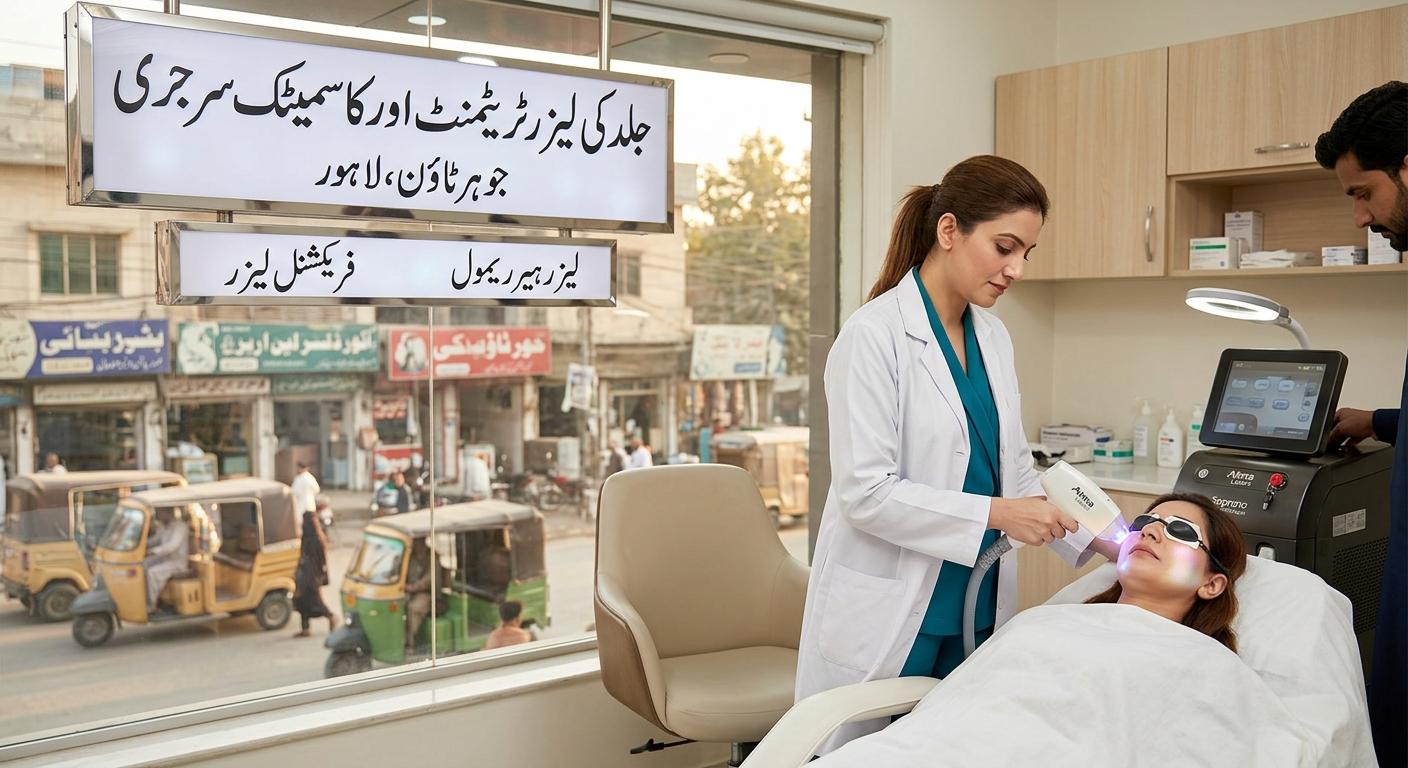
Laser treatment is one of the most searched and most misunderstood categories in skincare. Marketing language tends to lump wildly different technologies under one umbrella term, "laser treatment," as if a single device could treat acne scars, unwanted hair, pigmentation, and skin tightening equally well. It can't. This guide from Elora Dental and Aesthetics breaks down what's actually happening beneath the skin during laser treatment in Johar Town, Lahore, why the specific type of laser matters more than the word "laser" itself, and what Lahore's climate means for aftercare a detail almost no general laser article addresses.
"Laser Treatment" Is Not One Thing; It's a Category
The biggest source of confusion (and disappointment) in laser skincare comes from treating "laser" as a single treatment rather than a category of very different technologies, each suited to different problems:
-
Ablative lasers (such as CO2 or Erbium lasers) work by removing the outer layer of skin entirely, triggering a controlled wound-healing response that stimulates new collagen. These are more aggressive, involve real downtime, and are typically used for deeper scarring or significant sun damage.
-
Non-ablative lasers work beneath the surface without removing the top skin layer, targeting collagen or pigment while leaving the surface largely intact. These have far less downtime but usually need more sessions for comparable results.
-
Fractional lasers treat the skin in a grid of tiny columns rather than the entire surface at once, leaving surrounding tissue untouched to speed healing — a middle ground between ablative intensity and non-ablative gentleness.
-
Q-switched and pigment-targeting lasers work differently altogether, using short pulses tuned to specific wavelengths that shatter pigment particles (in melasma, sunspots, or certain tattoos) without significantly affecting surrounding tissue.
-
Laser hair removal devices target the pigment in hair follicles specifically, which is why they work best on hair that contrasts with skin tone and are far less effective on very light or grey hair.
The practical implication: asking a clinic "do you do laser treatment" is the wrong question. The right question is which specific laser type and wavelength is being used for your specific concern — because the wrong match can mean paying for a treatment that was never going to address your actual skin issue.
Why Skin Tone Matters More in Laser Selection Than Most Patients Realize
This is a detail that's frequently glossed over in general marketing content but matters significantly for patients in Lahore, where skin tones across the Fitzpatrick scale range broadly from fair to deep. Higher-energy, shorter-wavelength lasers carry a higher risk of post-inflammatory hyperpigmentation (dark patches that form after the skin is irritated) in medium-to-deep skin tones, because melanin absorbs more of that energy. This doesn't mean Skin Laser Treatment in Johar Town, Lahore is unsafe for deeper skin tones; it means the laser type, wavelength, and energy settings need to be deliberately adjusted, and a clinic that uses identical settings across every patient regardless of skin tone is taking on unnecessary risk. Ask directly whether settings are adjusted for skin tone before treatment begins; a clinic that can't answer this clearly is a red flag.
The Lahore-Specific Factor Most Guides Ignore: Sun Exposure and Aftercare
Laser-treated skin is significantly more vulnerable to UV damage for a period after treatment — the skin's protective barrier is temporarily disrupted, and new skin cells are more reactive to sun exposure than mature ones. This matters more in Lahore than in cooler, less sunny climates for a simple reason: even overcast days in Lahore carry meaningful UV exposure for large parts of the year, and daily commuting, market visits, or outdoor work make strict sun avoidance genuinely difficult for many patients.
Practical implications rarely spelled out clearly:
-
Sunscreen after laser treatment isn't optional or a "nice to have" — skipping it significantly raises the risk of post-treatment pigmentation, which can be harder to treat than the original concern.
-
Scheduling laser sessions is often smarter in cooler months or with a real commitment to shade and sunscreen, rather than during peak summer when sun exposure is harder to avoid during a normal day.
-
Direct exposure to intense heat (like standing over a stove, or extended time in direct sun) should be minimized for at least the first few days after most laser sessions, since heat can worsen inflammation in freshly treated skin.
Number of Sessions: Why "Results in One Visit" Claims Deserve Scrutiny
Most laser treatments particularly for pigmentation, scarring, and hair removal — require multiple sessions spaced weeks apart, because they work with the skin's natural biological cycles rather than producing an instant fix. Collagen remodeling after fractional or ablative laser treatment continues for weeks to months after a single session. Hair removal lasers only affect hair follicles in the active growth phase at the time of treatment, which is why a single session removes only a portion of total hair — subsequent sessions catch follicles that were dormant during earlier visits. Clinics advertising dramatic permanent results from a single laser session are describing an outcome that doesn't match how skin and hair biology actually work.
What to Ask Before Booking Laser Treatment in Johar Town
-
Which specific laser technology will be used for my concern, and why is it suited to it?
-
Will the settings be adjusted for my skin tone specifically?
-
What does aftercare look like for the first 48–72 hours, and what should I avoid?
-
How many sessions are realistically needed to see meaningful results for my specific concern?
-
Is there a dentist, dermatologist, or trained medical supervisor overseeing treatment, particularly for deeper or ablative procedures?
At Elora Dental and Aesthetics, laser treatment in Johar Town begins with an assessment of skin type, tone, and specific concern before recommending a laser type or treatment plan, rather than applying a single default protocol to every patient.
Frequently Asked Questions
1. Is laser treatment safe for all skin tones?
Yes, when the laser type, wavelength, and energy settings are properly matched to the patient's skin tone. Medium-to-deep skin tones carry a higher risk of post-treatment pigmentation if settings aren't adjusted, so it's worth confirming this is being done rather than assuming a one-size-fits-all approach is safe.
2. How many laser sessions will I actually need?
It depends heavily on the concern being treated. Pigmentation and scarring often require multiple sessions spaced several weeks apart for collagen remodeling to complete, while hair removal typically needs several sessions to catch hair follicles in different growth phases. Anyone promising full results in a single session should be treated with caution.
3. Do I need to avoid the sun after laser treatment, even in winter?
Yes. Laser-treated skin remains more vulnerable to UV damage for a period after treatment regardless of season, since even overcast or cooler days in Lahore carry meaningful UV exposure. Daily sunscreen isn't optional during this recovery window.
4. What's the difference between laser hair removal and other types of skin laser treatment?
Laser hair removal specifically targets pigment in hair follicles to disable future hair growth, while other lasers (fractional, ablative, pigment-targeting) work on skin texture, scarring, or pigmentation issues. They use different wavelengths and settings because they're solving fundamentally different problems.
5. Is there real downtime after laser treatment, or can I go back to normal activities right away?
It depends on the laser type. Non-ablative treatments often involve minimal downtime beyond some redness, while ablative or more intensive fractional treatments can require several days of visible healing and specific aftercare. Ask about expected downtime for your specific treatment type before booking, rather than assuming all laser treatments recover the same way.

 French