


Gutter Machines: Types, Benefits, Uses, and Buying Guide
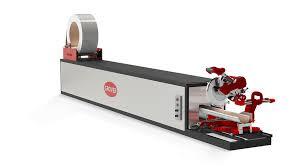
Professional gutter installation requires accuracy, consistency, and efficient material handling. While traditional gutter sections are available in standard lengths, contractors often need custom dimensions to fit different rooflines. Gutter machines provide a practical solution by allowing businesses to manufacture seamless gutters directly from metal coils.
For gutter contractors, having the right equipment can simplify production, reduce the need to transport long pre-cut sections, and provide greater flexibility on residential and commercial projects. However, machines differ in profile compatibility, material capacity, production speed, and portability, so choosing the right equipment requires careful consideration.
What Are Gutter Machines?
Gutter machines are specialized roll forming systems designed to transform flat metal coils into finished gutter profiles. The material moves through a series of rollers that gradually shape the coil into the desired configuration.
Once the profile has been formed, the continuous gutter can be measured and cut into sections based on project requirements. This allows contractors to produce custom-length gutters instead of relying exclusively on factory-cut sections.
Depending on the machine, contractors may be able to work with aluminum, steel, copper, or other compatible metals.
How Do Gutter Machines Work?
The process starts with loading a metal coil onto the machine. The coil is then fed through multiple forming stations.
Each set of rollers bends the material incrementally until it reaches the required gutter profile. After the gutter emerges from the final forming station, it can be cut to the desired length.
Proper machine setup is essential. Operators need to use compatible materials and adjust the equipment according to the manufacturer's specifications.
Incorrect settings can affect the gutter's dimensions, appearance, and fit during installation.
Common Types of Gutter Machines
Different machines are designed for different gutter profiles and sizes.
5-Inch Gutter Machines
Five-inch K-style gutters are widely used in residential construction. A machine designed for this profile can allow contractors to manufacture continuous gutter sections in various colors and materials.
This type of equipment may be suitable for businesses that primarily serve residential customers.
6-Inch Gutter Machines
Six-inch gutters are larger and can handle greater volumes of rainwater than standard five-inch systems when appropriately designed and installed.
They are commonly considered for larger homes, commercial properties, and buildings with substantial roof areas.
The correct gutter size should be determined based on factors such as roof area, roof pitch, rainfall intensity, and drainage design.
Half-Round Gutter Machines
Half-round gutters feature a curved profile and are often selected for traditional, historic, or architecturally distinctive buildings.
Specialized machines can form this curved profile continuously while maintaining consistent dimensions.
Materials Used With Gutter Machines
The materials a gutter machine can process depend on its design and manufacturer specifications.
Common options include:
- Aluminum
- Galvanized steel
- Galvalume
- Copper
- Pre-finished metal
Aluminum is popular because it is lightweight, corrosion-resistant, and available in a broad selection of colors. Steel can provide additional strength, while copper is often selected for decorative or architectural applications.
Before purchasing equipment, contractors should confirm the machine's compatible material thickness, coil width, and profile requirements.
Benefits of Gutter Machines
Gutter-forming equipment can provide several practical advantages for professional contractors.
Seamless Gutter Production
A major benefit is the ability to manufacture long, continuous gutter sections. This can reduce the number of joints required along a roofline and create a cleaner finished appearance.
Fewer joints can also simplify certain aspects of installation, although properly designed connections and outlets are still essential to the complete gutter system.
Custom-Length Guttering
Contractors can produce gutters according to the measurements of individual projects. This can be particularly useful for long rooflines, custom buildings, and projects where standard lengths are inconvenient.
Reduced Material Waste
Producing gutters to specific measurements can help reduce excess material created by cutting standard-length sections.
This can be especially valuable when working with more expensive metals or large project quantities.
Easier Material Handling
Portable gutter machines allow contractors to produce gutters near or directly at the job site. Long finished sections do not have to be transported from a distant manufacturing location.
This can make loading, unloading, and installation more manageable.
Greater Business Flexibility
Owning suitable gutter equipment can allow a contractor to offer different profiles, sizes, materials, and colors.
This flexibility can make it easier to accommodate different customer requirements.
Factors to Consider Before Buying a Gutter Machine
A gutter machine represents an important equipment investment, so contractors should evaluate several factors before purchasing.
Gutter Profile
First, determine which gutter profiles the business installs most frequently. The machine should be capable of producing those specific profiles accurately.
Material Compatibility
Check the manufacturer's specifications for compatible metals, thicknesses, and coil dimensions. Not every machine can process every material.
Using material outside the recommended specifications may affect production quality or cause unnecessary equipment wear.
Production Capacity
Consider the company's average workload rather than choosing equipment based only on maximum production speed.
A small contractor may have no practical need for a high-volume industrial machine, while a large gutter manufacturer may require greater production capacity.
Portability
Portable equipment can be useful for contractors who manufacture gutters at job sites. Stationary machines may be better for businesses with dedicated production facilities.
Consider transportation requirements, available workspace, and the types of projects the business typically handles.
Manufacturer Support
Technical support can be just as important as the machine itself. Review warranty terms, availability of replacement parts, operator training, maintenance guidance, and customer support before making a purchase.
Gutter Machine Maintenance
Regular maintenance helps keep forming equipment operating properly and producing consistent gutters.
Depending on the machine, routine maintenance may include:
- Cleaning forming rollers
- Checking roller alignment
- Inspecting fasteners
- Lubricating approved components
- Checking for worn parts
- Inspecting electrical connections
- Removing metal debris
Operators should follow the maintenance schedule provided by the manufacturer. Preventive inspections can help identify problems before they result in production delays.
Gutter Machine Safety
Gutter machines contain moving components and should be operated only by trained personnel. Operators should understand the equipment's controls, safety procedures, and manufacturer's instructions.
Basic precautions include using suitable protective equipment, keeping hands away from moving rollers, maintaining a clean work area, and securing loose clothing.
Metal coils and finished gutter sections may also have sharp edges, making careful material handling important.
Is a Gutter Machine Worth the Investment?
For contractors who install gutters regularly, a gutter machine can be a valuable business asset. Custom-length production can improve flexibility and reduce some transportation and material-handling challenges.
However, profitability depends on the individual business. Equipment cost, production volume, labor efficiency, material savings, maintenance, transportation, and customer demand should all be considered.
Calculating expected production and potential savings before purchasing can help determine whether the equipment makes financial sense.
Final Thoughts
Gutter machines give professional contractors the ability to manufacture seamless gutters from metal coils according to project-specific requirements. They can improve production flexibility, support custom lengths, simplify material handling, and potentially reduce certain forms of material waste.

 French