


What Should Kaixinmagnetic Super Strong Permanent Magnetic Chuck Buyers Consider
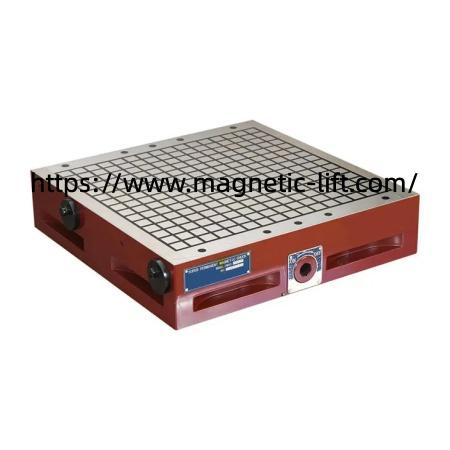
Super Strong Permanent Magnetic Chuck performance can be influenced by the thickness of the workpiece being held. For manufacturers and machining workshops, this detail matters because magnetic coupling is affected by material dimensions, contact conditions, surface quality, and pole arrangement. A suitable configuration should therefore be considered according to the actual parts being processed rather than a single rated figure.
Thickness matters because the magnetic field needs a suitable path through the workpiece. When a steel part is relatively thin, the available material beneath the contact surface can influence how the magnetic circuit behaves. Industry guidance notes that finer pole arrangements can be suitable for smaller or thinner parts, while different pole spacing may be more appropriate for larger sections.
This does not mean that thicker material automatically creates a particular result in every application. Material composition, surface condition, geometry, and contact area also play important roles. A thick component with an uneven surface may have less effective contact than a thinner component with a clean and flat surface. An air gap between the holding surface and the workpiece can reduce the available holding capability.
For thin plates, buyers should pay attention to the relationship between thickness and pole pitch. Smaller pole divisions can provide more contact points across a small section, which may help accommodate certain thin components. The actual result still depends on the material and application, so technical data should be reviewed together with the dimensions of the parts being processed.
Thicker sections present a different consideration. More material beneath the contact area can provide a deeper path for the magnetic field, but the shape and surface of the component remain important. Large blocks, plates, and structural parts may require a configuration designed around their dimensions. For this reason, suppliers usually need information about length, width, thickness, material type, and machining process before recommending a suitable configuration.
Surface condition becomes especially relevant when thickness varies across different production batches. Rust, scale, paint, chips, machining marks, or uneven surfaces can introduce small gaps between the contact faces. Such gaps can reduce magnetic coupling even when the workpiece itself has sufficient thickness. Keeping both surfaces clean and reasonably flat can therefore contribute to more consistent holding conditions.
Another factor is the material itself. Not every steel grade responds identically to magnetic clamping. Alloy content and permeability can influence the available holding capability. Buyers should therefore provide the actual material specification when requesting a product recommendation. This is particularly useful when a workshop processes several grades with different compositions.
Machining method should also be considered. Grinding, milling, inspection, and other operations can place different demands on workholding. Cutting forces, vibration, feed direction, and the amount of material being removed may change the requirements. Some industrial systems are designed specifically for grinding or milling, while others are configured for different workholding applications.
For customers comparing different technologies, an Electro Permanent Magnetic Chuck can also be considered when the application involves electronically controlled clamping and automated loading requirements. Such systems use electrical control for activation and deactivation while maintaining the holding state without continuous electrical input after activation.
A useful purchasing process begins with accurate application information. Record the minimum and maximum material thickness, common part dimensions, material grade, surface finish, machining method, expected cutting conditions, and working frequency. These details give the manufacturer a clearer basis for discussing the appropriate configuration.
It is also worthwhile to consider how the equipment will fit into the existing machine setup. Table dimensions, available space, connection arrangements, machining travel, and access around the workpiece can all influence the final selection. A configuration that fits the machine physically may still require careful assessment of the actual working area and part geometry.
Kaixinmagnetic focuses on magnetic workholding equipment for industrial users and can discuss product configurations according to specific material dimensions and machining requirements. Providing detailed information at the inquiry stage can make product communication more precise and reduce uncertainty during selection.
For unusual thickness ranges, coated surfaces, irregular shapes, or mixed production requirements, sample evaluation can be useful. Testing representative parts allows users to assess contact behavior under realistic conditions before adopting a configuration for regular production.
Thickness should therefore be treated as one part of a broader selection process. Material composition, pole pitch, surface quality, workpiece geometry, machining method, and machine compatibility all deserve attention. When these factors are considered together, buyers can make a more practical equipment decision. Kaixinmagnetic offers a range of magnetic workholding products for different industrial applications. Customers can review available configurations at https://www.magnetic-lift.com/product/ and compare options according to their actual machining requirements.

 French