


Building Strong Foundations from the Ground Up
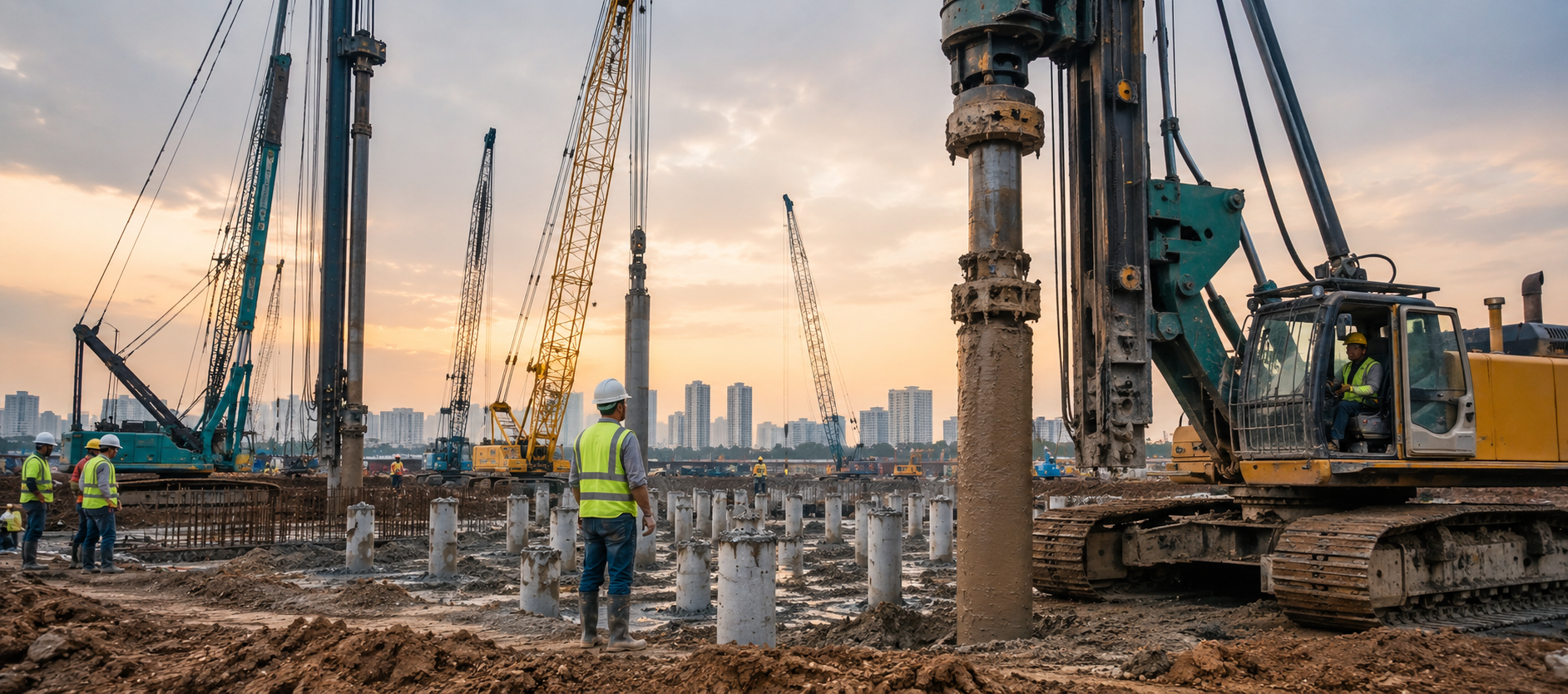
Modern civil engineering and structural developments demand robust, highly stable foundation solutions capable of supporting substantial structural loads. Soil conditions vary dramatically across different construction zones, presenting challenges such as unstable ground, high water tables, and cohesive clay strata. Selecting the correct foundation engineering technique ensures long term structural integrity and minimizes site risks. Continuous flight auger piling stands out as one of the most efficient, versatile, and quiet ground engineering methods available in contemporary construction.
Ground engineering projects require a careful balancing act between structural load capacities, environmental impact, and execution speed. Continuous flight auger methods eliminate many traditional borehole installation risks by combining soil extraction and concrete placement into a seamless, continuous cycle. This non displacement piling method ensures superior stability, preventing ground collapses and maintaining soil balance even in unstable conditions.
To successfully execute these complex foundation techniques, site managers rely on expert CFA Piling Contractors who bring specialized machinery, skilled engineering personnel, and precise quality control procedures to the job site. Experienced contractors evaluate site specific geotechnical data, select appropriate auger tooling, and monitor concrete flow rates in real time. Their technical oversight guarantees that every pile reaches the exact design depth while fully meeting structural load bearing capacity parameters.
Mechanics of Continuous Flight Auger Technology
Continuous flight auger technology operates using a hollow stem continuous auger that drills into the subsoil to the designated design depth. As the auger rotates into the ground, soil travels up the continuous flights without displacing surrounding earth laterally. The hollow center tube remains sealed during drilling, preventing ground water and soft soil from entering the drill string.
Once the target depth is reached, high strength structural concrete or fluid grout is pumped through the hollow stem auger. Pumping commences under controlled pressure as the auger is slowly withdrawn. This dual action maintains constant support against the borehole walls, eliminating the need for temporary steel casings or bentonite slurry support fluids.
After the concrete fills the cylindrical shaft completely to ground level, a prefabricated steel reinforcement cage is placed into the fresh concrete. Modern installation techniques utilize vibratory equipment or controlled manual insertion to place reinforcement cages up to required structural lengths. The continuous process delivers a cast in situ pile free from voids or structural defects.
Benefits of CFA Foundation Solutions in Construction
Noise and vibration control represent major benefits of continuous flight auger systems. Unlike traditional driven piles that use heavy impact hammers, auger drilling generates minimal ground vibration and operates quietly. This characteristic makes the technique ideal for urban construction sites, historical zones, and infill developments adjacent to existing structures.
Installation speed and site productivity are significantly enhanced with continuous flight auger rigs. Combining drilling and concrete placement into one fluid operation drastically reduces cycle times per pile. High production outputs lower overall site labor expenses and accelerate foundation completion schedules for commercial and residential developments.
Soil adaptability is another significant advantage of this ground engineering technique. Continuous flight auger methods perform exceptionally well across diverse geological conditions, including soft clays, dense sands, silts, and water bearing strata. The continuous concrete support mechanism prevents borehole wall collapsing, ensuring pristine foundation integrity across complex, multi layered soil profiles.
Geotechnical Applications and Ideal Ground Profiles
Geotechnical structural engineers routinely specify continuous flight auger piles for sites featuring loose or cohesionless soils. In granular soils like sand and gravel, standard rotary bored piling risks side wall collapse due to water pressure or soil instability. The constant pressure maintained by the auger flighting and concrete pump prevents soil caving entirely.
Cohesive clay soils also benefit from auger piling methods. Clay strata can experience skin friction relaxation if left exposed to atmospheric air or groundwater during extended drilling processes. Immediate concrete placement through the hollow stem locks in skin friction and end bearing capabilities immediately upon auger withdrawal.
High groundwater levels present severe challenges for traditional foundation installation techniques. Continuous flight auger piling overcomes groundwater infiltration because the hollow stem stays sealed until concrete pumping starts under pressure. Hydrostatic groundwater pressures cannot breach the sealed concrete column, guaranteeing dense concrete placement without moisture dilution.
Quality Assurance and Instrumentation in CFA Piling
Real time computer monitoring systems are integrated into modern auger piling rigs to record critical installation parameters. Sensor networks measure rotary torque, drilling speed, penetration rate, concrete volume, and concrete pumping pressure throughout execution. Operator cab displays show real time graphics, ensuring precise execution according to structural engineering specifications.
Concrete placement logs provide full transparency and quality verification for structural engineers and project certifiers. Automated monitoring equipment tracks the concrete oversupply ratio, confirming that the volume of concrete pumped exceeds the theoretical shaft volume. This overbooking ratio ensures that necking, concrete voids, or soil contamination cannot occur within the pile shaft.
Subsequent integrity testing validates the structural soundness of completed piles after concrete curing. Methods such as low strain impact integrity testing and sonic logging detect minor internal flaws, pile profile changes, or concrete discontinuities. Rigorous quality assurance regimes give asset owners complete confidence in foundation load capabilities.
Technical Comparison With Other Piling Systems
Comparing foundation techniques reveals distinct operational advantages for continuous flight auger methods against alternative deep foundation solutions. Traditional driven steel or concrete piles offer high load capacities but create severe noise pollution and ground heave. Ground vibrations from driven systems can damage nearby structural foundations in dense urban environments.
Standard rotary bored piling allows deep drilling and large pile diameters, but requires temporary casings or drilling muds in unstable ground. Handling casing installation and fluid slurry management increases site logistics complexity, equipment footprint, and labor overhead. Continuous flight auger methods eliminate temporary support measures, simplifying site operations significantly.
Mini piling or micro piling systems are suitable for restricted access areas, but lack the structural load capacity for heavy commercial structures. Continuous flight auger rigs deliver high capacity foundation support across medium to large scale structural loads, making them the preferred choice for commercial, industrial, and infrastructure developments.
Environmental and Sustainability Advantages
Reduced noise emissions from auger piling equipment significantly limit community disturbance during construction phases. Urban planning authorities strictly regulate site decibel levels, often preferring auger installation methods over high noise impact driving techniques. Quieter site environments improve overall safety and community goodwill.
Minimal ground vibration preserves surrounding infrastructure, avoiding settlement or structural cracking in neighboring properties. Protecting structural integrity of adjacent buildings reduces project liability risks and simplifies pre construction condition surveys. Ground displacement risks are virtually zero when using correctly operated auger rigs.
Efficient material utilization and reduced site waste contribute directly to green building certifications. Excavated soil brought to the surface by the auger flights can often be reused on site for non structural backfilling or regrading work. Furthermore, concrete pumping systems optimize material usage, reducing structural concrete waste during foundation creation.
Essential Equipment and Machinery Capabilities
Heavy duty tracked piling rigs form the primary machinery power unit for auger piling projects. These specialized rigs feature high torque rotary heads, heavy duty masts, and sophisticated hydraulic control systems. Crawler tracks distribute machinery weight evenly, allowing safe operations across unreinforced working platforms.
Concrete pumps paired with auger rigs must deliver continuous high pressure flows of structural concrete mixes. Concrete pump lines connect directly to the rotary head swivel at the top of the mast, feeding concrete down the hollow stem smoothly. Consistent pumping pressure maintains shaft stability during auger extraction.
Specialized auger flight designs and teeth configurations are selected based on site specific ground hardness. Carbide tipped drill bits cut through dense soil strata, soft rock, and obstructions efficiently. Properly maintained auger tooling prevents drilling stalls and preserves design depth precision.
Design Factors for Structural Engineers
Engineers determine pile depth and diameter by evaluating ultimate limit state and serviceability limit state parameters. Soil bore logs, standard penetration test results, and laboratory soil mechanics data inform calculations for skin friction and end bearing resistance. Continuous flight auger piles mobilize substantial skin friction along their length.
Reinforcement cage design must account for handling stresses, concrete flow clearance, and structural load requirements. High performance reinforcement cages feature rigid centralizers to keep steel centered within the pile shaft, ensuring adequate concrete cover against environmental corrosion. Cage lengths typically range from six to eighteen meters depending on bending moments and uplift forces.
Concrete mix design for auger piles requires tailored workability and setting characteristics. Highly flowable concrete mixes featuring slump flow characteristics or high slump performance ensure smooth pumping through hollow auger stems without segregation. Aggregates are carefully graded to flow freely around dense steel reinforcement cages during insertion.
Step by Step Site Execution Process
Site preparation begins with constructing a stable, level working platform capable of supporting heavy piling rigs and concrete delivery trucks. Geotechnical engineers inspect platform stability to prevent rig tilting or ground failure during heavy operations. Precise survey points mark every pile center location across the site grid.
Rig setup involves positioning the auger bit precisely over the survey stake, verifying mast verticality with dual axis inclinometers. The operator engages the rotary head, driving the auger into the soil while monitoring drilling torque and speed. Drilling continues continuously until reaching the structural target depth.
Once target depth is verified, concrete pumping begins immediately to build pressure within the hollow stem. The rig operator lifts the auger slowly, keeping the auger tip submerged within freshly pumped concrete at all times. Soil spoil on the auger flights is cleared at ground level, the reinforcement cage is installed, and top concrete is finished to the specified cutoff elevation.
FAQs
What ground conditions are best suited for CFA piling?
Continuous flight auger piling works exceptionally well in mixed soil profiles, including clays, sands, silts, and water bearing strata. It is particularly effective in unstable ground where un cased boreholes would collapse.
How deep can CFA piling rigs drill?
Standard commercial rigs install piles up to depths between fifteen and thirty meters, with specialized heavy rigs capable of reaching depths beyond thirty five meters depending on pile diameter and soil strength.
What pile diameters are typically available?
Typical pile diameters range from 300 millimeters up to 1200 millimeters, allowing engineers to tailor pile sizes precisely to structural column loads and geotechnical capacities.
How is concrete quality maintained inside the pile shaft?
Concrete quality is verified using automated instrumentation that records concrete volume versus auger extraction height in real time. Maintaining concrete oversupply pressure guarantees dense shafts free of soil contamination.
How soon after concrete placement can reinforcement cages be installed?
Reinforcement steel cages are inserted into the pile shaft immediately after concrete pumping finishes while the concrete remains fluid, using cage vibrators or controlled gravitational placement.
Conclusion
Continuous flight auger foundation engineering provides an efficient, quiet, and highly reliable deep foundation method for modern construction projects. Its unique capability to drill and concrete simultaneously eliminates borehole collapse risks while maintaining high production rates across challenging soil profiles. By utilizing integrated digital monitoring and advanced hydraulics, structural engineers and developers achieve verified load capacities and exceptional structural reliability. Selecting this advanced foundation technique ensures projects remain cost effective, environmentally compliant, and built upon secure ground foundations.

 French